Buying Original Art for Your Home: A Practical Guide
— Practical guidance from my studio
Buying original art for your home is personal, but it also involves a number of practical questions. Because this page is mainly about choosing an artwork for a wall, I focus here on paintings. I also create sculptural objects, but these involve partly different considerations regarding placement, scale and presentation.
Will the size work on the wall? Do the colours suit the room? How can you assess a painting through a screen? Does it need a frame? And how do you know whether a work will remain interesting after the initial attraction?

Choosing with attention
On this page, I help you look at these questions more closely. Not to make the decision entirely rational, but to better understand what a painting needs within your space, and what you expect from the work yourself.
1. Start with the artwork, not the empty wall
Many people begin their search with a particular place in their home:
Like something needs to go above the sofa.
That is a logical starting point, but it is not always the best selection criterion. When you only search for a particular colour, size or shape, you may end up choosing something that merely completes the room neatly.

An original artwork can do more than fill an empty space. It can change the atmosphere of a room, introduce something that was not there before or provide a quiet counterbalance to the rest of the interior.
Begin by noticing which works continue to hold your attention.
Do you keep returning to a particular painting? Is there a colour, figure, line or layer of paint that stays in your mind? Does the work evoke something, even when you cannot immediately explain what it is?
These are often more useful signals than an exact match with the colour of a wall or piece of furniture.
“Begin by noticing which works continue to hold your attention”

2. What should the artwork add to the room?
An artwork can function in many different ways within an interior.
It may:
- create calm or a sense of space;
- become a clear focal point;
- add warmth;
- introduce tension or contrast;
- evoke a personal memory or association;
- make a minimal interior feel more human and less predictable.
Try not only to describe what you like, but also what may be missing from the room.

If the space is already lively and full, a quieter work may be particularly effective. If the room is neutral and restrained, a more expressive painting may add character.
In my own work, soft and raw elements often exist alongside one another. A light, almost vulnerable form may be surrounded by dark lines, thick layers of paint or an exposed ground. A painting therefore does not have to be exclusively calming or powerful. Different qualities can remain present at the same time.
That layered quality allows a work to reveal itself gradually rather than all at once.


3. Do not choose by colour alone
It makes sense to consider the colours already present in a room. An artwork does not exist separately from its surroundings.
However, a painting does not need to match the sofa, curtains or rug exactly. When every colour corresponds perfectly, the work may disappear too easily into the interior.
Look instead at the relationships between colours.
A colour from the painting may subtly reappear elsewhere in the room, but the work may also deliberately contrast with its surroundings. A muted blue-grey painting can work particularly well against a warm wall. Ochre, rust and umber may add warmth to a cooler interior.
Also consider the balance between light and dark areas. This often has more influence on the presence of a painting than one individual colour.
My advice is therefore:
First choose the work that continues to hold your attention. Then consider how it relates to the room.
Not the other way around.
4. Size is about more than centimetres
When choosing an artwork, people often focus primarily on the available height and width. These measurements matter, but they do not determine the entire presence of a work.
A small painting can command a great deal of attention when it contains strong contrasts or a concentrated composition. A large work may feel calm when it contains open space and subtle transitions of colour.

In my studio, I work in a range of formats, including:
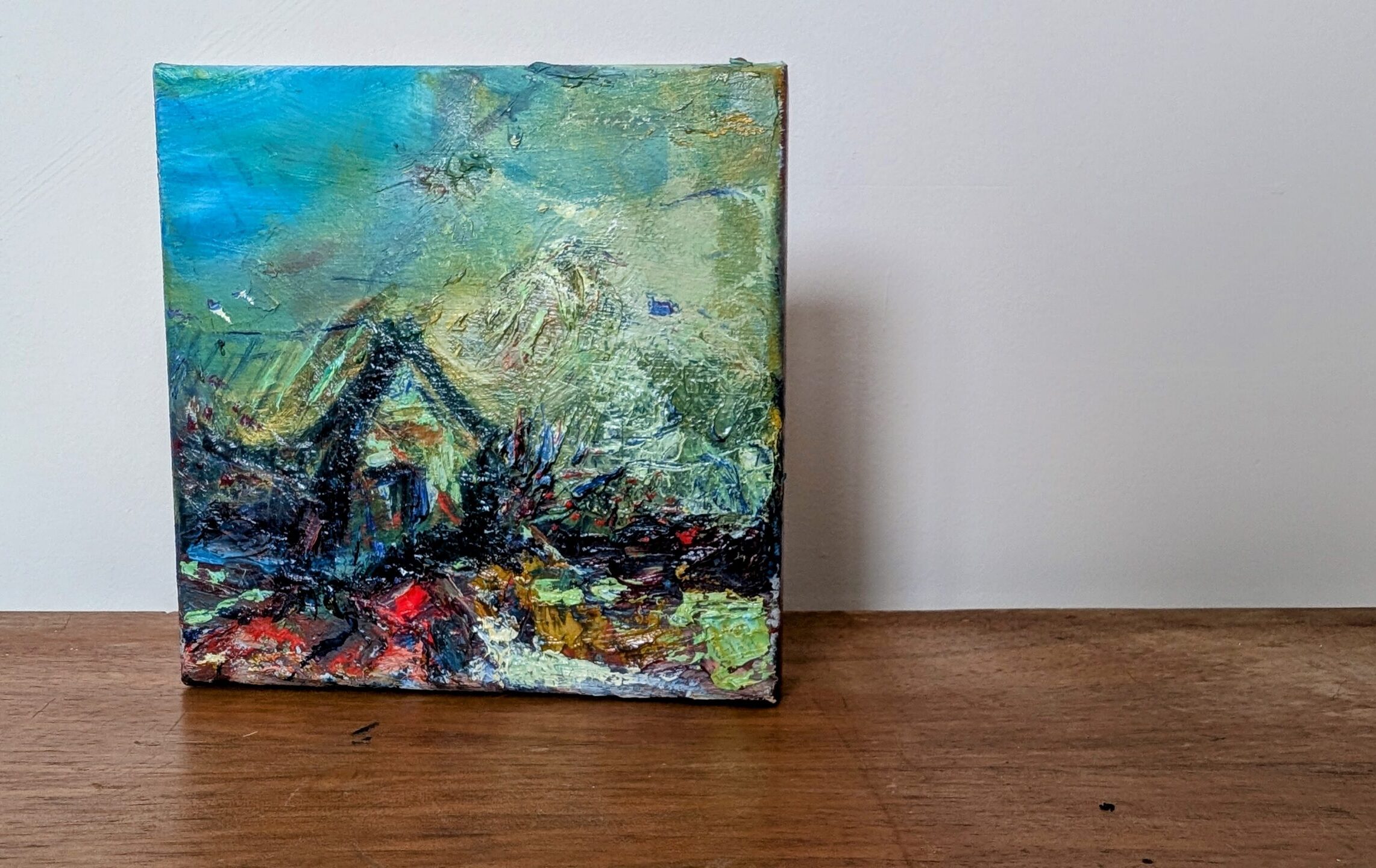
- small works and studies measuring approximately 20 × 20 cm;
- medium-sized works of around 50 × 50 cm;
- larger paintings measuring 70 × 100 cm or more.
A small work usually benefits from a place where you naturally come closer to it: beside a cabinet, in a reading corner, above a small table or as part of a carefully arranged group.
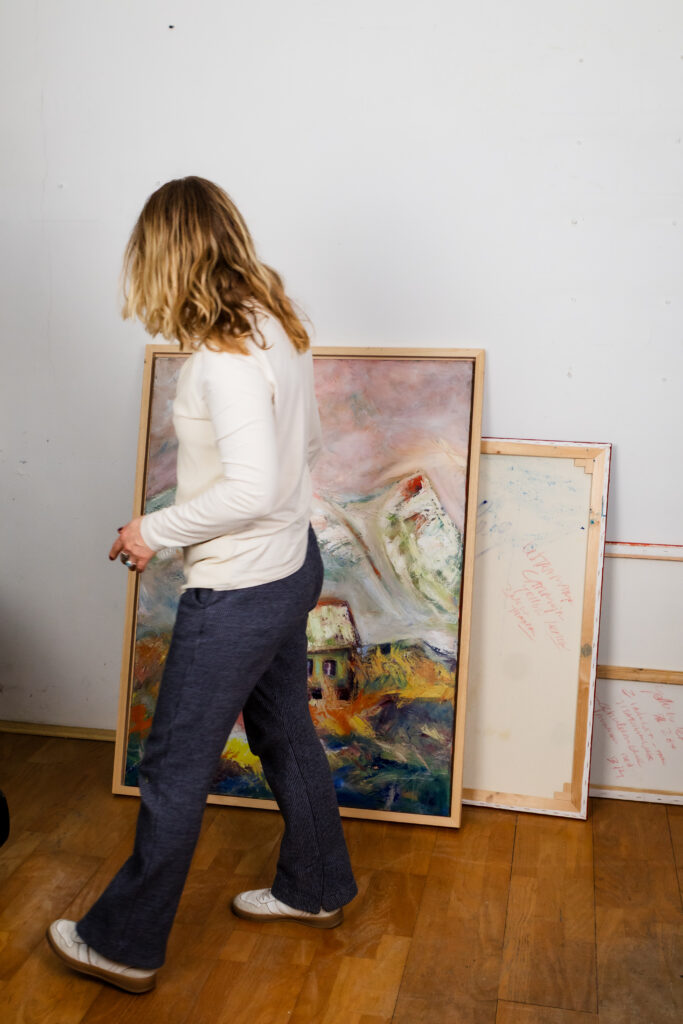
A larger painting is usually viewed from a greater distance. It can therefore influence not only the wall, but the atmosphere of the entire room.
A simple painter’s-tape test
Use painter’s tape to mark the outer dimensions of the artwork on the wall. Then look at the shape:
- from the doorway;
- from the sofa or dining table;
- while walking through the room;
- during both daylight and evening light.
This gives you an impression of whether the format has enough presence and how much space remains around it.
Bear in mind that a real painting will usually have more visual weight than an empty rectangle of tape. Colour, material and texture all make the work more present.

5. Give the artwork enough space
A painting does not need to hang on a completely empty, museum-like wall. It can work very well alongside furniture, ceramics, books or other artworks.
However, some visual space helps the work to be seen properly.
When a painting is immediately surrounded by many small objects, photographs and decorations, its details and layers may become less legible. This is particularly relevant with layered work. The eye needs enough calm to move across the surface.
Consider not only whether the work physically fits, but also whether it will receive enough attention in its chosen position.
That does not mean everything around it has to be removed. The aim is to create a balanced relationship between the artwork, the wall and the other elements in the room.

6. What a photograph cannot fully show
A photograph can provide a useful impression of colour, composition and format. However, some qualities of an original painting remain difficult to convey through a screen.

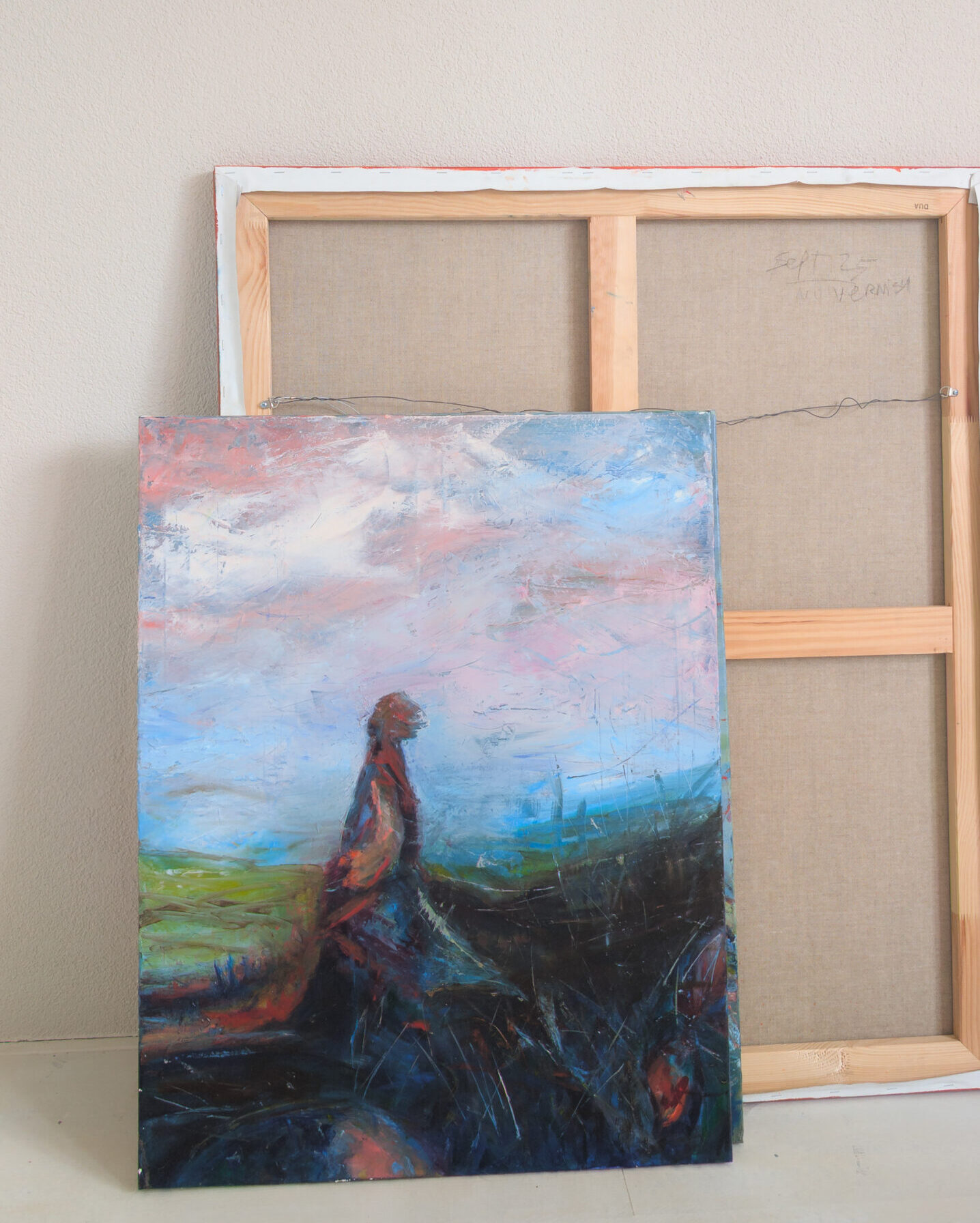
Built in layers
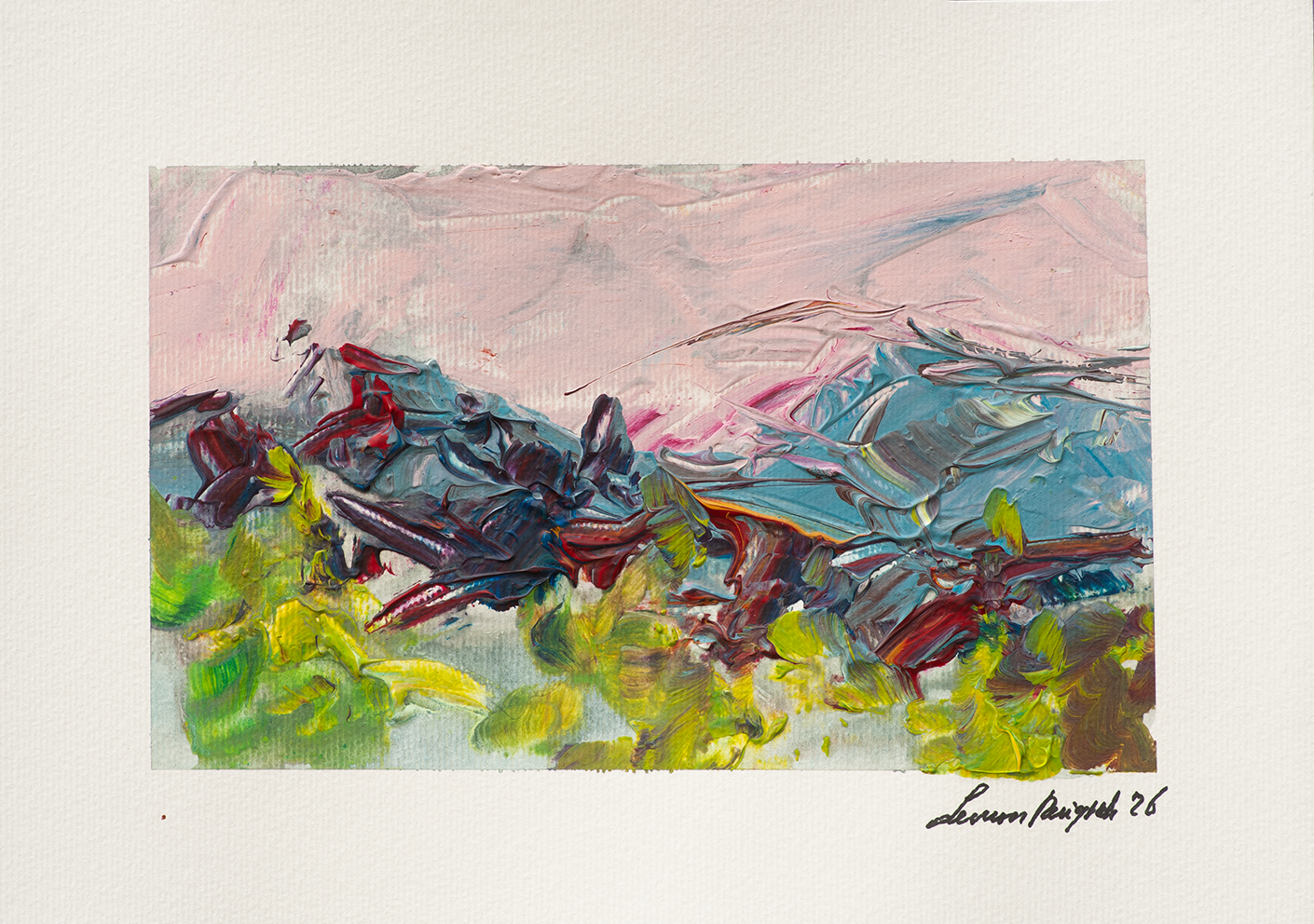
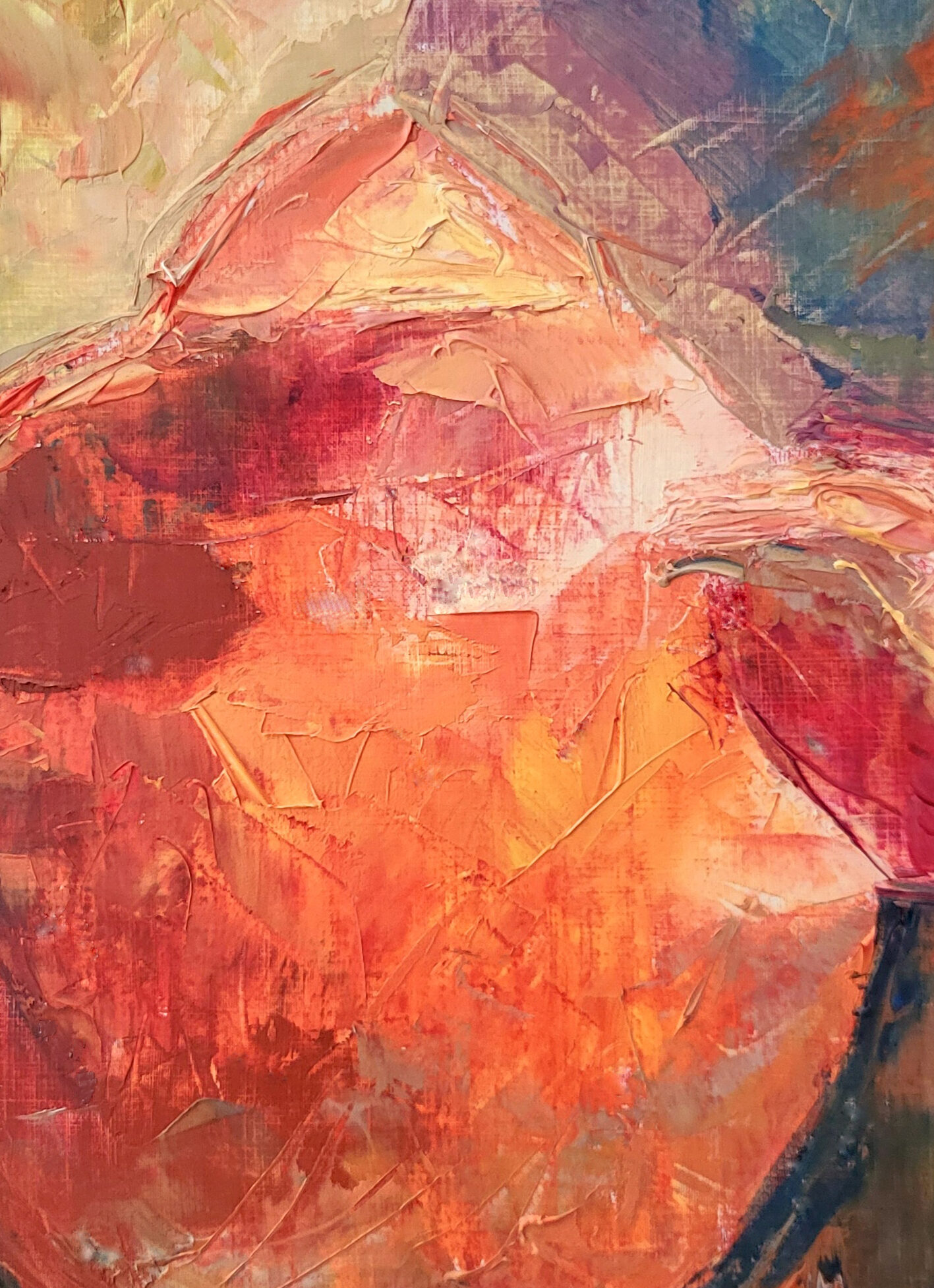
My paintings are built up in layers, usually using oil paint, mixed media or acrylic. Colour, texture, underlying lines, matt and glossy areas, and sometimes deliberately exposed edges all influence how a work is experienced. As a result, a painting may appear different, and often more spatial, in reality than it does in a photograph.
The intuitive side of choosing art
Practical questions about size, placement and material matter. Yet choosing art is never an entirely rational process.
In my blog When Does an Artwork Feel Right?, I write about attention, intuition and the difference between a quick impulse and an artwork that continues to stay with you.

Layers of paint and relief
Thicker paint catches the light differently from a smooth surface. Brushstrokes, palette-knife marks and raised areas may cause the appearance of a painting to change throughout the day.
Matt and glossy areas
Oil paint and mixed media can have different levels of sheen. A dark area may appear closed from one angle and reveal more depth from another.
Underlying images and lines
In my work, previous layers, drawings and alterations often remain partly visible. Some details can be seen immediately. Others only emerge when you move closer.
The edges of the work
The sides and edges are also part of the painting. Sometimes they are fully worked; sometimes parts of the process remain visible. This may influence whether a frame is necessary or desirable.
The actual scale
On a phone screen, a painting measuring 70 × 100 cm may appear no larger than a work measuring 20 × 20 cm. It is therefore difficult to judge physical presence online.
Always check the exact dimensions rather than relying only on the image.
7. Assessing an artwork online
When viewing an artwork online, do not look only at the main photograph.
Also check:
- the exact height, width and depth;
- the materials and support;
- close-up photographs of the paint surface;
- photographs of the sides and edges;
- whether the work is framed;
- whether it is ready to hang;
- whether an interior image is shown to scale;
- how collection or shipping will be arranged.
For my available works, I provide information about size, materials, year of creation and other relevant details. Each original artwork is also supplied with a certificate of authenticity.
When you are uncertain about the scale, a photograph of the work in the studio or beside a recognisable object may provide more clarity. A digital impression of the painting on your own wall may also help, provided that you treat it as an indication rather than an exact representation.
8. What I want to know before advising someone
When someone asks me which work might be suitable, I do not immediately point towards one particular painting.
I first look at the context.
The following questions are relevant:
- Which room is the work intended for?
- From what distance will it usually be viewed?
- Which dimensions are possible?
- Are you looking for calm, strength, warmth or contrast?
- Should the work attract immediate attention or reveal itself gradually?
- Are there particular works you keep returning to?
- Is a recognisable figure, landscape or symbolic form important to you?
- Would you like to see the work in person first?
A photograph of the wall can be useful, but it does not tell the whole story. The advice is not only about what physically fits. It is also about which work can retain its own presence while adding something meaningful to the room.
I have often seen someone return to the same work before any practical considerations have been discussed. I always take that difficult-to-explain attraction seriously.
Sometimes the painting that fits the available measurements most perfectly is not the work someone ultimately chooses. One work may fit the wall exactly, while another continues to do something more.
That difference matters.

9. Choosing between two artworks
Being uncertain between two works does not necessarily mean that neither is right.
Try viewing them separately rather than continuously comparing them side by side. When two paintings are visible at the same time, you automatically begin comparing differences in size, colour and price. This can make it harder to experience each work on its own terms.
Look at the first work, then step away. Repeat the process with the second.
Afterwards, ask yourself three questions:
- Which work do I continue to think about?
- Which work do I want to see again?
- Which work would I miss if it were no longer available?
During a studio visit, I can also place works in different positions. A painting may respond very differently against a light wall than against a darker or warmer background. The viewing distance also makes a difference.
These are not scientific measurements. They can, however, reveal whether you are mainly making a rational comparison or whether one work has already acquired a stronger place in your mind.


10. Buying original art online or viewing it in the studio
Both options are possible.
Online, you can compare different series, sizes and prices at your own pace. This is practical when you live further away or would first like to make a selection.
A studio visit provides different information. You can see the actual colours, paint layers, edges and scale. You can also compare different works side by side or view them separately.
During a studio visit, you can ask questions about:
- how the work was created;
- the materials used;
- the meaning of particular forms or symbols;
- size and placement;
- framing;
- availability;
- collection or shipping.

There is no obligation to make an immediate decision during the visit.
When you do choose a work and immediate collection is possible, it may be taken home by arrangement. Payment can also be arranged during the visit. Read more about a studio visit >
personal viewing
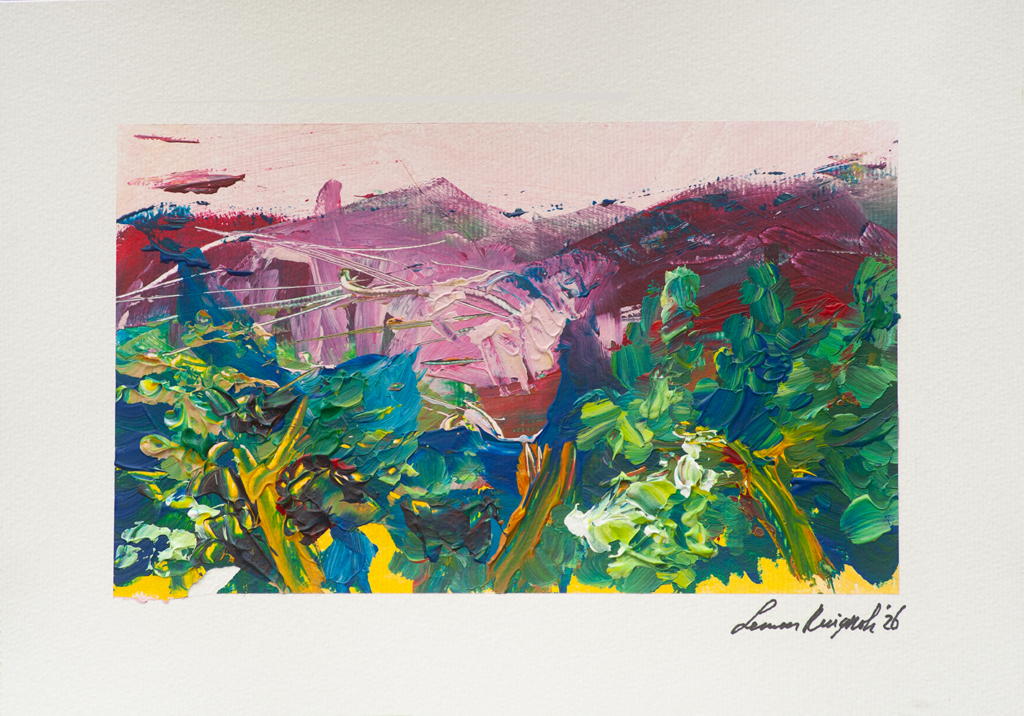
LOOKING FOR COLOUR AND MOVEMENT?
11. What is included with an original artwork
When you purchase an original work, you receive more than the physical artwork itself.
This includes:
a certificate of authenticity
Every original artwork comes with a signed certificate of authenticity.
information about the title, size, year and materials
Each work comes with clear information about its title, dimensions, year of creation and materials used.
clear arrangements regarding collection or shipping
Collection or shipping is arranged clearly in advance, including the practical details and any applicable costs.
practical information about placement and care
You’ll receive practical guidance on where to place your artwork and how to care for it over time.
advice about framing where relevant
If a work benefits from framing, I’m happy to advise on an approach that suits both the artwork and its character.
PRIORITY STUDIO INVITATIONS
When you purchase an original artwork, you can join my collector list and receive priority invitations to upcoming open studio dates before they are announced more widely.
Whether a work is ready to hang depends on its materials and construction.
A painting on canvas can often be beautifully displayed without a frame. A work on paper will usually require protection behind glass. But it depends on what you prefer.
Shipping arrangements depend on the size, fragility and destination of the work. Large or heavily layered paintings require different packaging from small studies or works on paper.

12. Seeing an artwork in context
A short, specific collector’s experience can be added here. Rather than using a general statement such as “We are very happy with the painting,” it is more useful to show something of the actual selection process.
EXAMPLE OF HOW A WORK CAN FUNCTION IN A ROOM
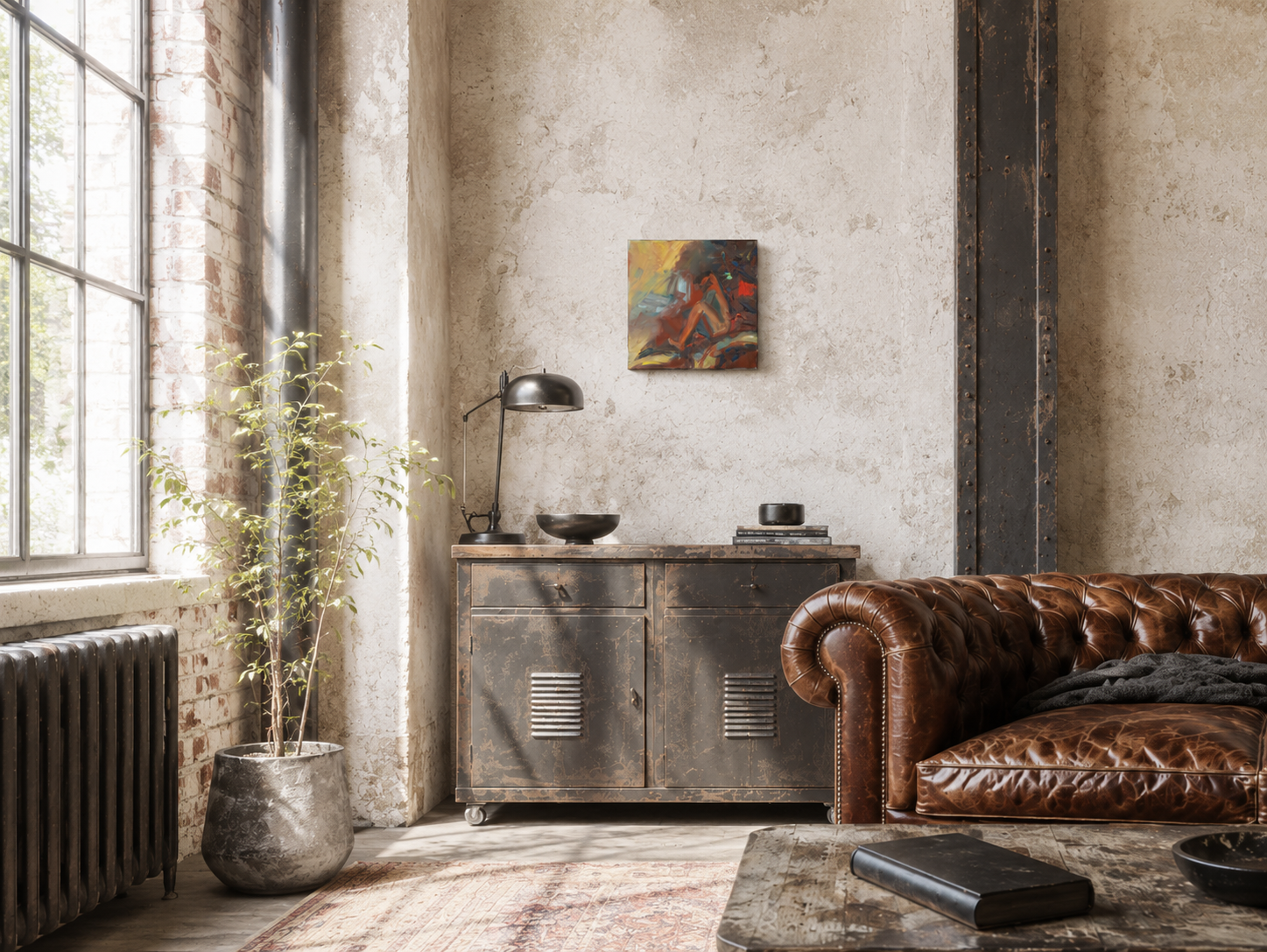

From uncertainty about atmosphere to a clearer choice
This example shows how a painting can begin to make sense once it is seen in relation to a room. At first, the question was not only which work would fit the wall, but also what kind of presence was needed in the space. Compared with lighter or more abstract options, this painting brought more depth, contrast and emotional focus. What ultimately mattered was not simply the colour, but the way the work grounded the room and created a more intimate atmosphere.
“Seeing the work in context made it easier to understand what it would actually bring to the room.”


The same painting can feel very different depending on its surroundings. A darker wall increases contrast and makes the work more of a focal point, while warm colours, natural materials and softer daylight allow it to become more integrated into the room.

13. Frequently asked questions about choosing art
– Does a painting need to match the colours in my interior?
Not exactly. A colour connection can work well, but an artwork may also introduce contrast. What matters more is whether the overall atmosphere of the work functions within the room and whether the painting remains interesting in its own right.
– How do I know whether an artwork is too small?
A work may appear too small when it becomes lost on a large wall or when it is usually viewed from a considerable distance. Use painter’s tape to test the format and assess the proportions from different positions in the room.
– Can I send a photograph of my wall?
Yes. A straight photograph of the wall, preferably including a piece of furniture or another recognisable element, can help with assessing the scale. Include the width and height of the available space as well.
– Can a painting be hung without a frame?
That depends on the work. Some canvases have finished or deliberately visible sides and can be displayed without a frame. With other works, a floating frame may strengthen the presentation.
– Is a studio visit only intended for people who are already planning to buy?
No. A studio visit is an opportunity to view works in person and ask questions. You do not need to make an immediate decision.
– Can a purchased artwork be shipped?
In many cases, yes. The options and costs depend on the size, materials, destination and required packaging.
– How should I protect a painting in my home?
Avoid hanging a work in prolonged, strong direct sunlight. Also avoid highly fluctuating temperatures and very humid spaces. Do not touch relief or textured paint surfaces unnecessarily, and never use household cleaning products on the artwork.
A limited number of my works are framed to museum standards, with a presentation specifically chosen to suit the series. When this applies, it is stated in the artwork description. A museum-framed work should still be protected from prolonged direct sunlight, moisture and major temperature fluctuations.

14. The most important question
Practical information helps you make a considered decision. But an artwork does not only need to work within a room.
It may change the way you experience that room. It can create calm, offer resistance, evoke memories or repeatedly direct your attention towards a particular form, colour or detail.
Ultimately, one question remains the most important:
Do you want to continue looking at this work — not only today, but over time?
When the answer keeps returning, that is usually more meaningful than a perfect colour match.
View available work

See more work in the studio
Would you like to see the works in person, compare them and also view work that is not available online?
Original paintings, available from the studio
___

___

___

___