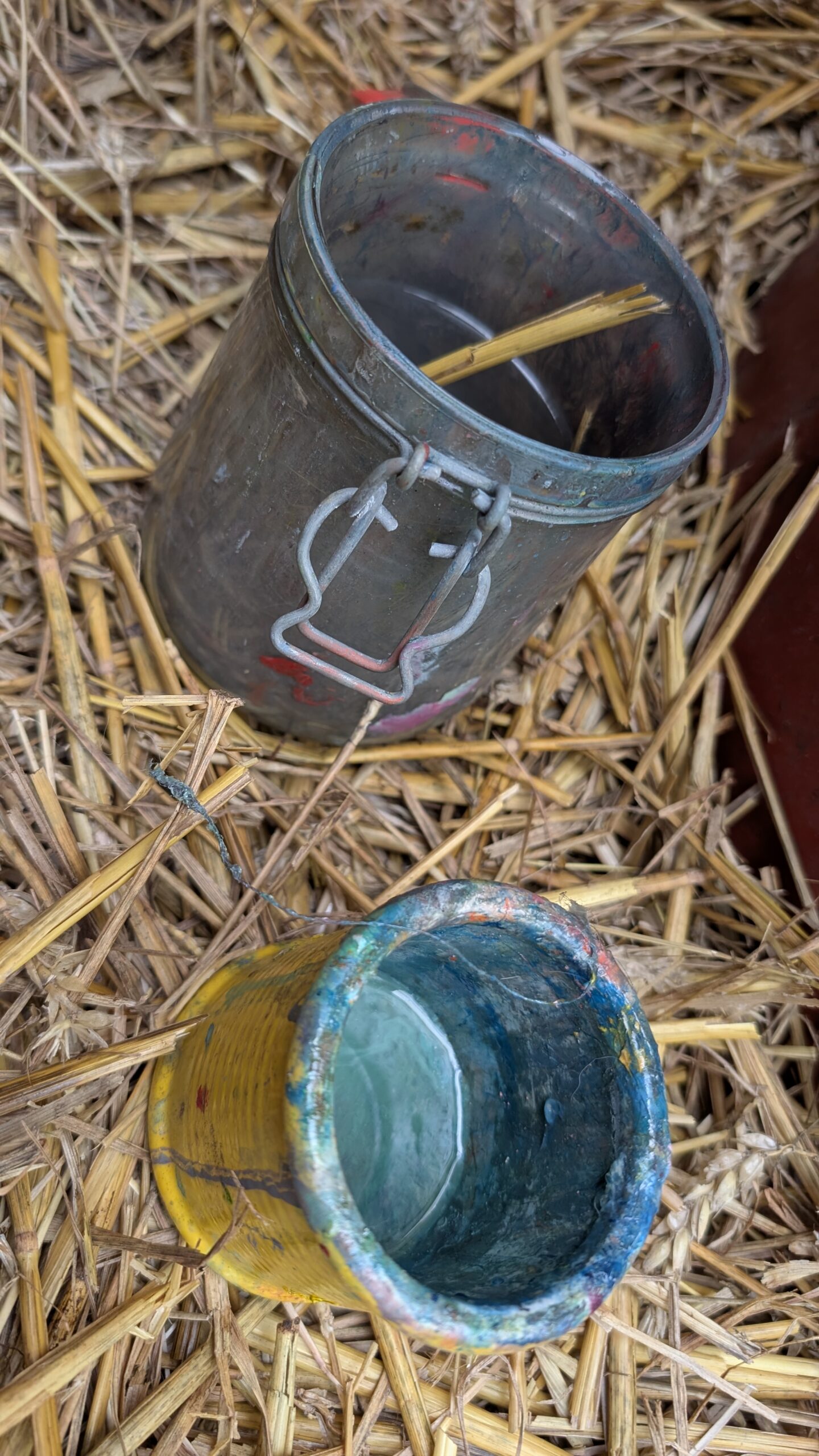
Luckily, early summer has arrived. That means I can work again in my most hidden outdoor studio spot. Properly loose. No one looking over my shoulder.
I have several places where I work. A more visible studio, where works can stand, hang, dry and be seen. And then there is this extra workspace on our land. Less tidy. Less white. More straw, earth, chickens, jars, paint and now and then something I later look at and think: why is this even here?
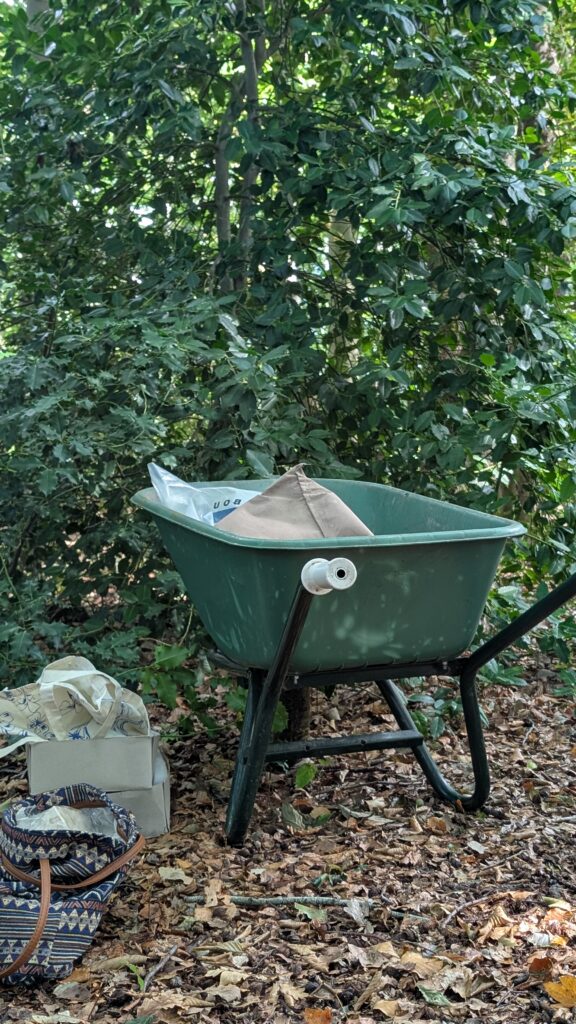
But honestly, that works well for me.
Not everything has to begin in a clean studio. Sometimes a work begins much better in a place that rubs a little.
Where you stand with your feet in the straw. Where a chicken walks past as if she also has an opinion about the composition.
Material Is Never Just Material
Material is never just material to me.
A specific kind of medium, different brushes and gear. An empty canvas and material tests. An edge of paint that behaves differently than I had imagined. These are not just tools to make an image. They are part of the beginning.
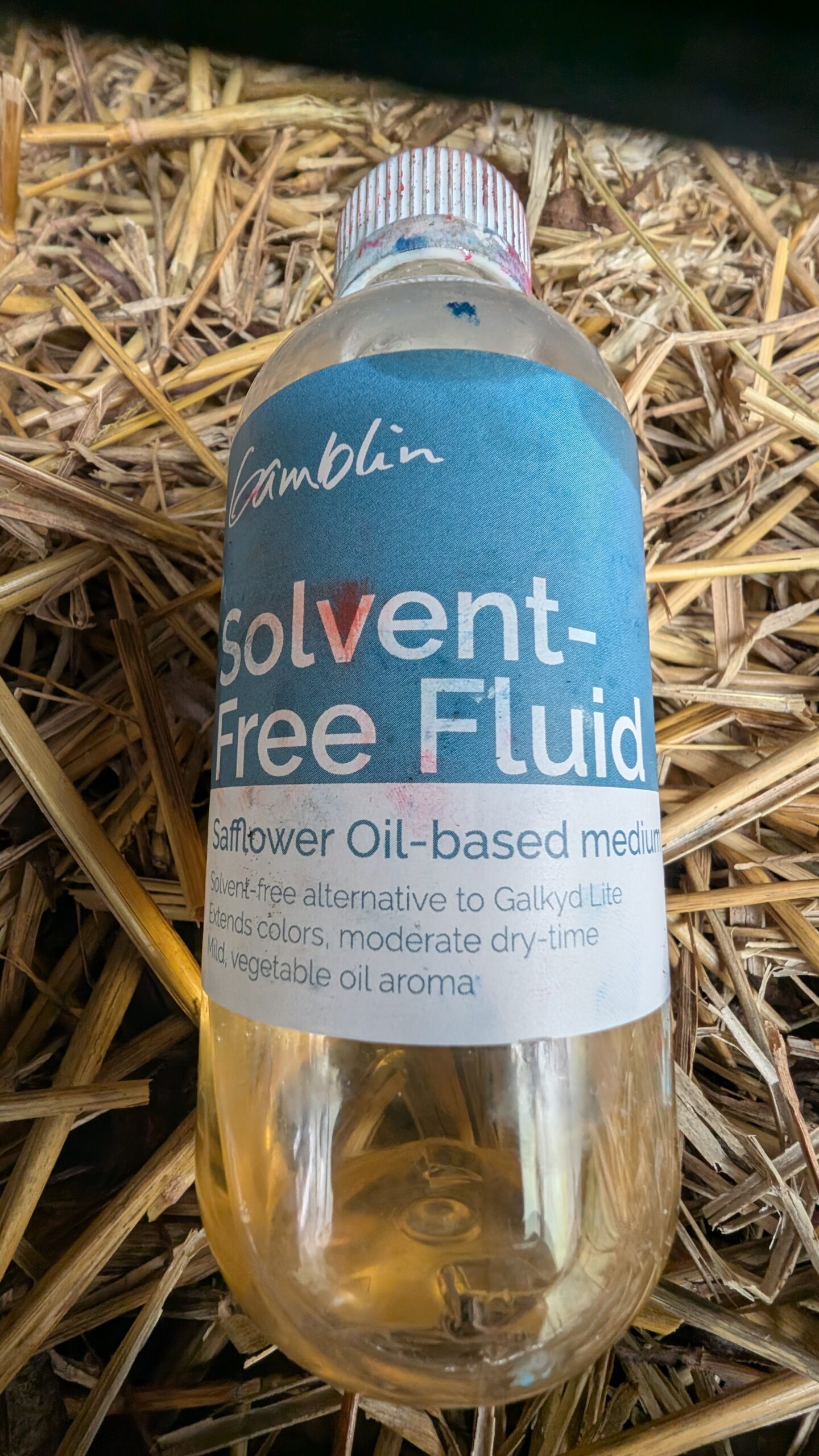
I worked here with a turpentine-free medium. Wonderful, because my materials are becoming more and more nature-friendly. That feels increasingly close to the way I want to work. Not because I suddenly have a perfectly sustainable studio, far from it. There is still enough mess. And I am not always as organised as my head likes to believe.
more critical of what I use.
What smells too strong. What no longer feels right. What can be softer, cleaner, simpler. Not necessarily well-behaved, but definitely more conscious!
At the same time, I do not want the material to become too tidy. Paint may clash. Medium may shine. A surface may stick, shift, resist, stay open. Often, that is exactly where something begins.
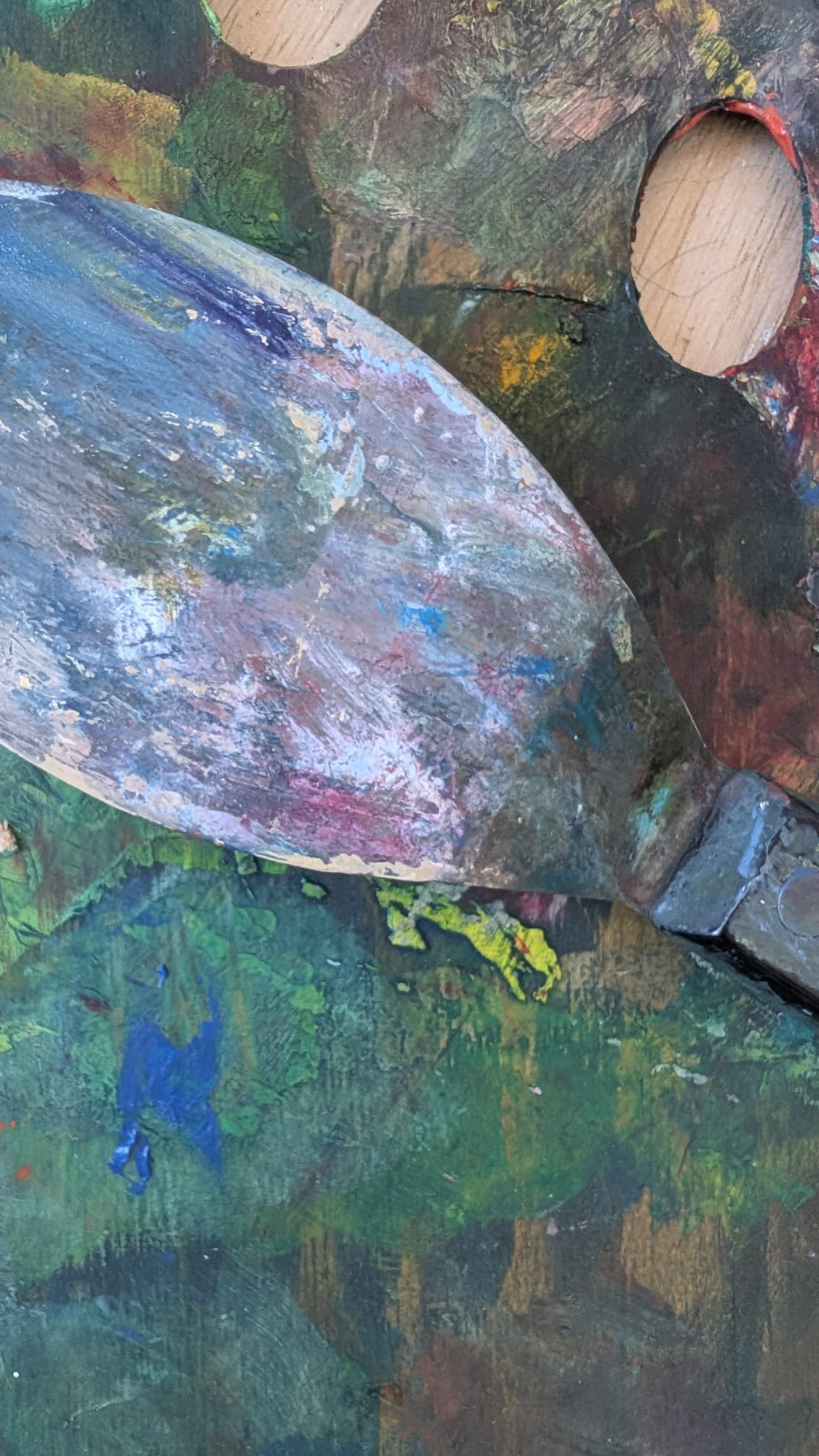


In a clean studio, I can start correcting myself too quickly. I see everything.
Too much sometimes. Every stain, every failed edge, every decision that perhaps could have been better. And before I know it, I start saving the image. That sounds noble, but most of the time it does not make the work better.
In my outdoor studio, it is different.
The attention is looser there. There is room to try without having to finish everything straight away. It does not have to be a good work immediately. It may simply be an investigation first. A skin. A layer. A movement. A mistake that may not turn out to be a mistake.
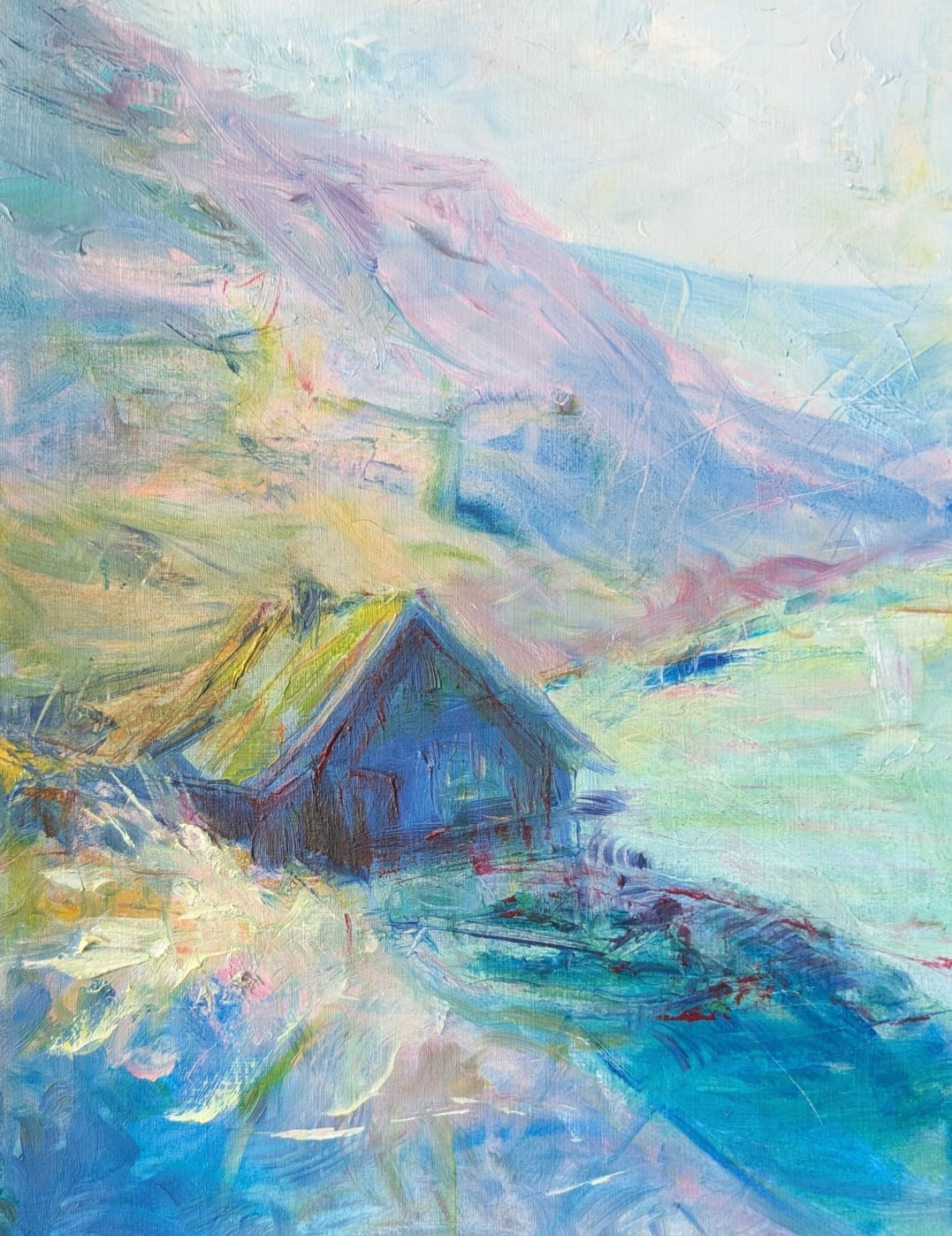
With both feet in the straw, it is hard to be too solemn about art. That helps.
Less tidy. And much closer to myself. Because I do find it difficult not to be distracted by other people’s opinions, and by judgments I think I hear.
And apart from our animals, there is very little distraction. That may sound idyllic, but a chicken suddenly deciding to scratch around exactly behind your pot of medium is also just a practical reality. Still, that is precisely the kind of reality I like. Not sterile. Not polished. Alive.
– – x cm
Not A Clear Image Yet
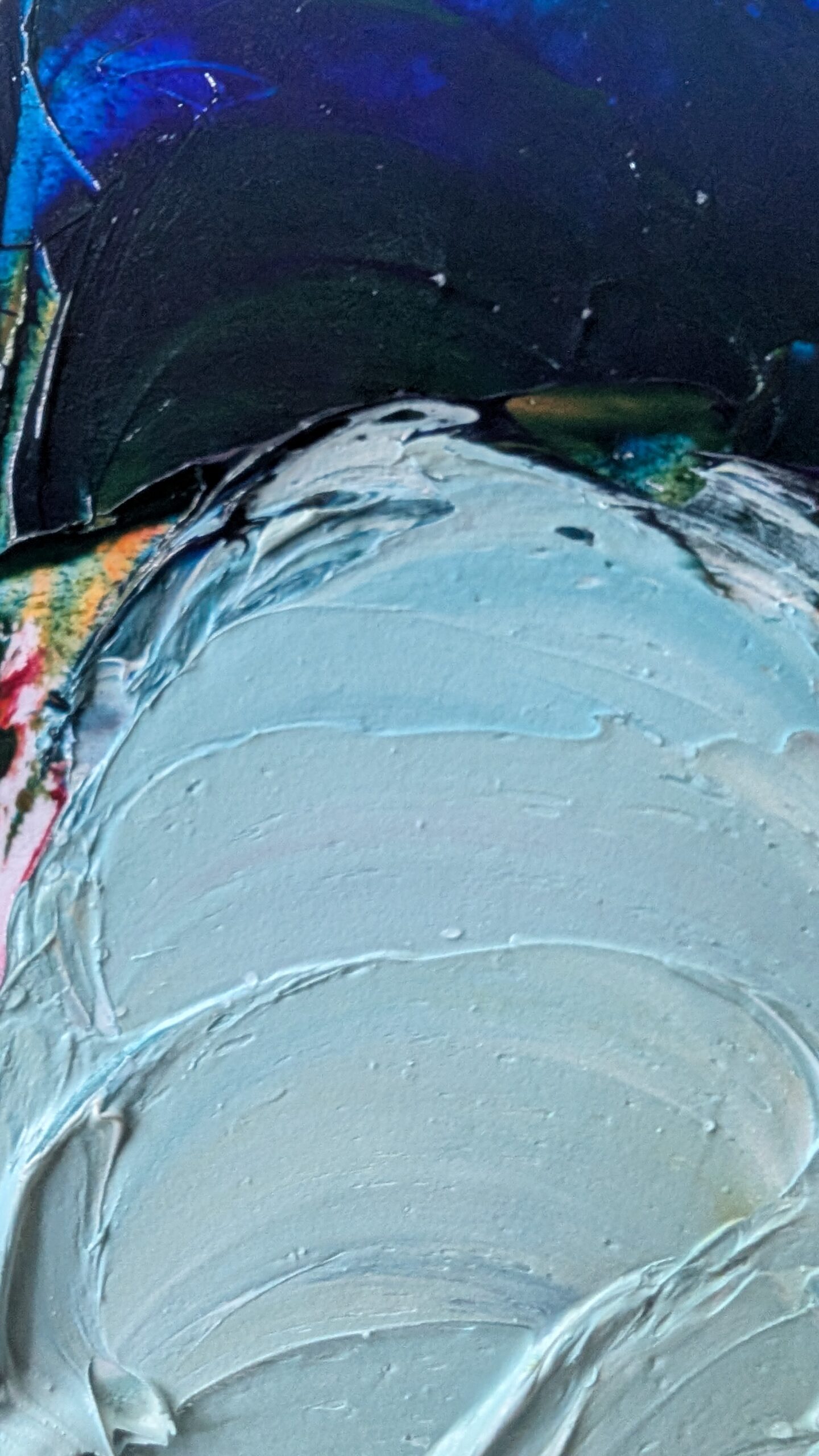
Often, a work does not begin with a clear image, but with feeling. With a colour that stays with me. An edge. A movement. A piece of paint skin. Something I saw outside without immediately thinking it mattered. Straw, earth, a greenhouse line, a piece of plastic catching light, a dark mark in the land. Later, it returns.
Not only in the head. Also in the hand. In the material. In that fight with the surface, which is sometimes much more honest than a beautiful plan. Because a beautiful plan can also close the work down. Luckily, the material does not care much about that.
Following The Material
I think I am learning more and more to let the material speak first for a while. That may sound romantic, but in practice it mainly means: not intervening too quickly. Not wanting to control everything immediately. Watching what happens when paint, medium, canvas, straw, outdoor air and my own impatience start something together. Sometimes it works. Sometimes it does not. That is part of it too.