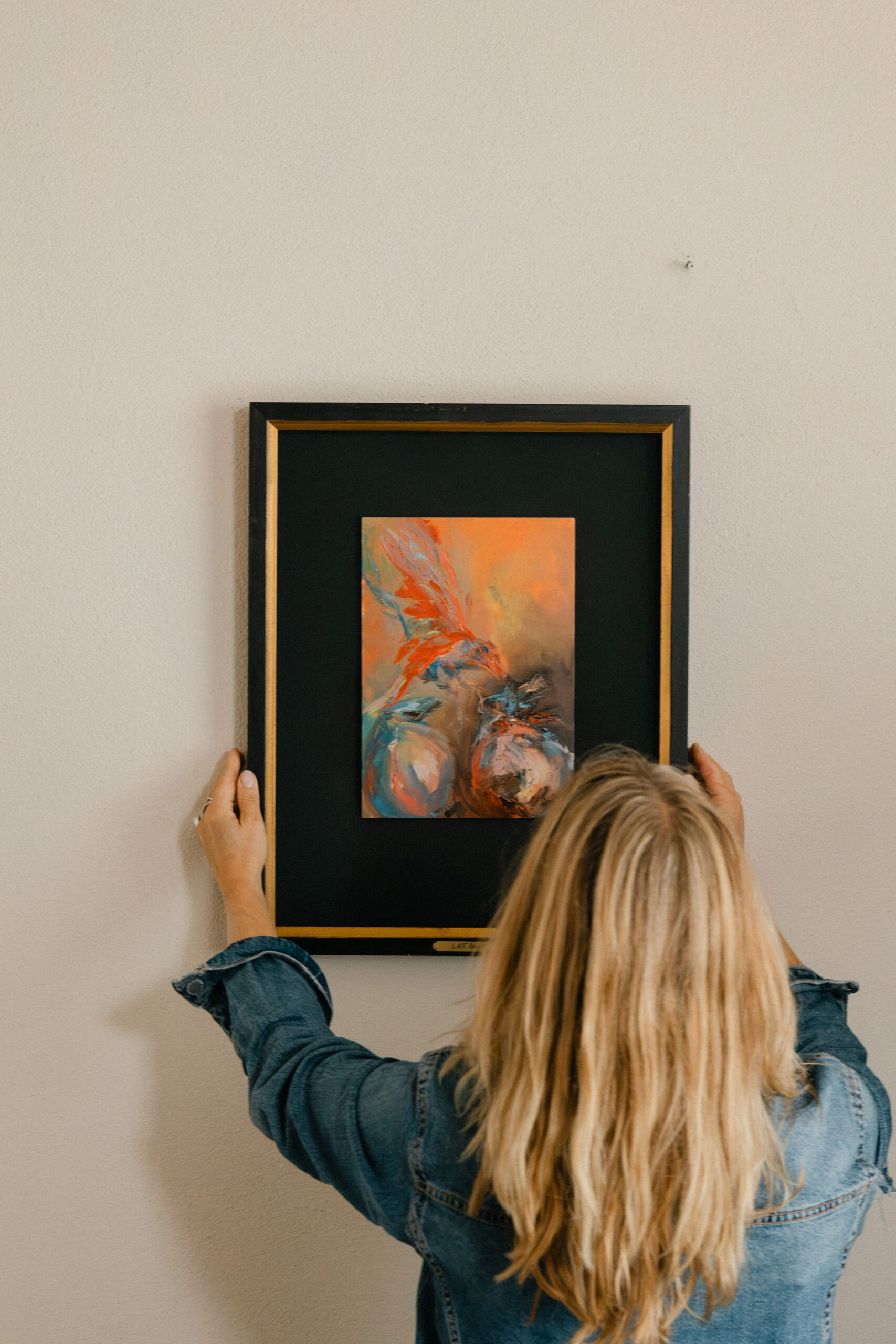
On framing, museum glass and my collaboration with De Lijsterij
In a relatively short period of time, several series of works on paper emerged in my studio. Some were created using traditional oil painting techniques, while others grew out of experiments with paint, charcoal and paper. Once the works were ready to be exhibited, a new question arose: how could I protect them without taking away their freedom?
During my studies at art school, I had learned to approach presentation primarily from an artistic perspective. A work on paper could simply hang from a line, perhaps held by a few small clips. Light, direct and in keeping with the character of the work. For years, that was how I presented my work at exhibitions.
For long-term display, however, this proved less suitable. Paper responds to changes in humidity and temperature. Dust can settle on layered paint surfaces, and over time, light can affect materials and colours. I began looking for a way of framing that would offer protection while preserving the character of the artwork.

A Meeting at the Worktable
Through fellow artists, I heard about a traditional framing workshop in the heart of Voorhout: De Lijsterij, run by Karolien. When I stepped inside, it turned out that Karolien and I knew each other from years ago. After a surprised “Hey, is that really you?” we sat down at her worktable.
What followed was anything but a standard conversation about choosing a suitable frame. No, definitely not! Karolien first asked what mattered most to me when creating and presenting my work. Freedom, movement and space were the words that kept coming back. “If those are your starting points, shouldn’t the artwork have room to breathe inside the frame as well?” That question ultimately shaped the way we worked together.
An Artwork That Can Still Breathe Inside Its Frame
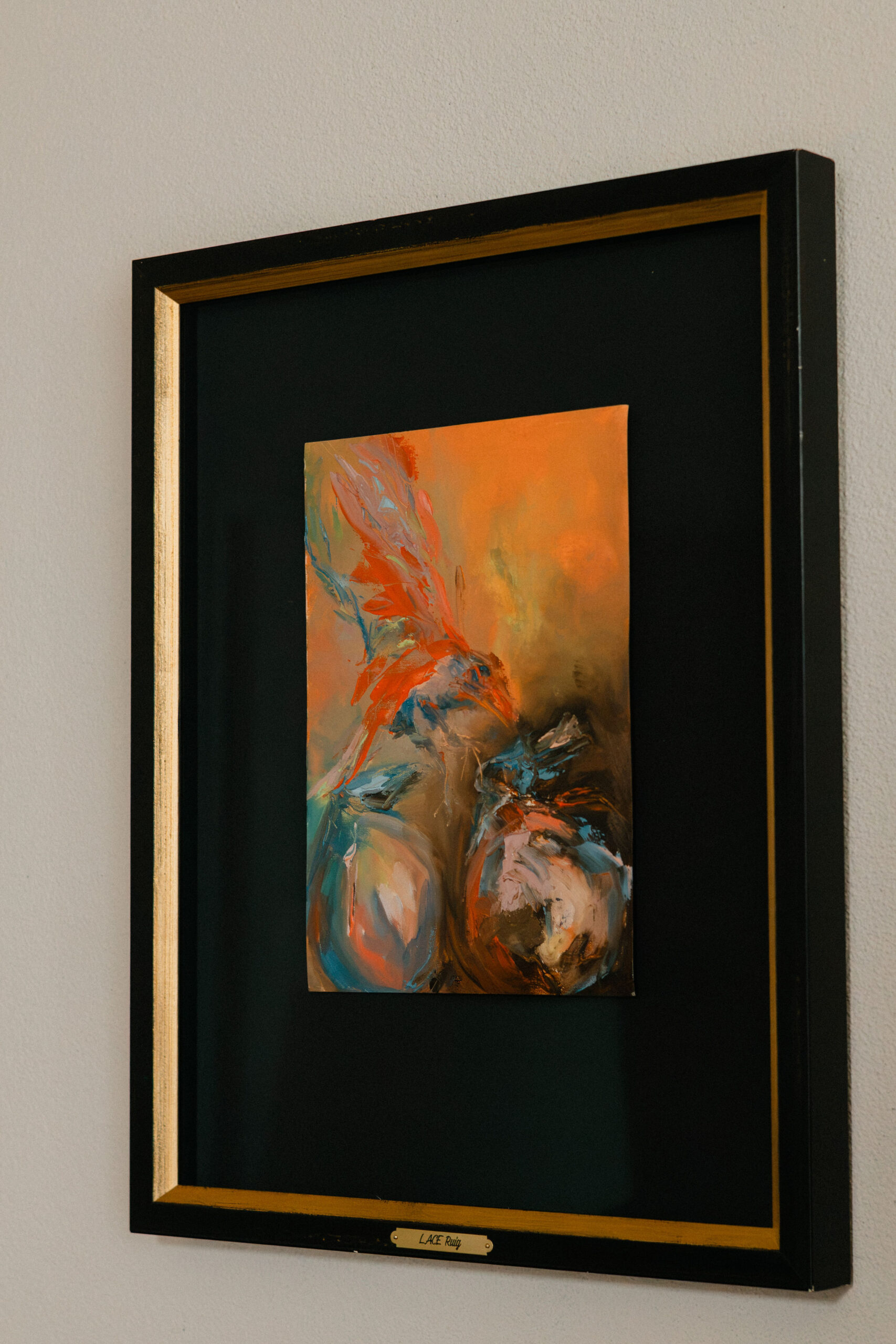
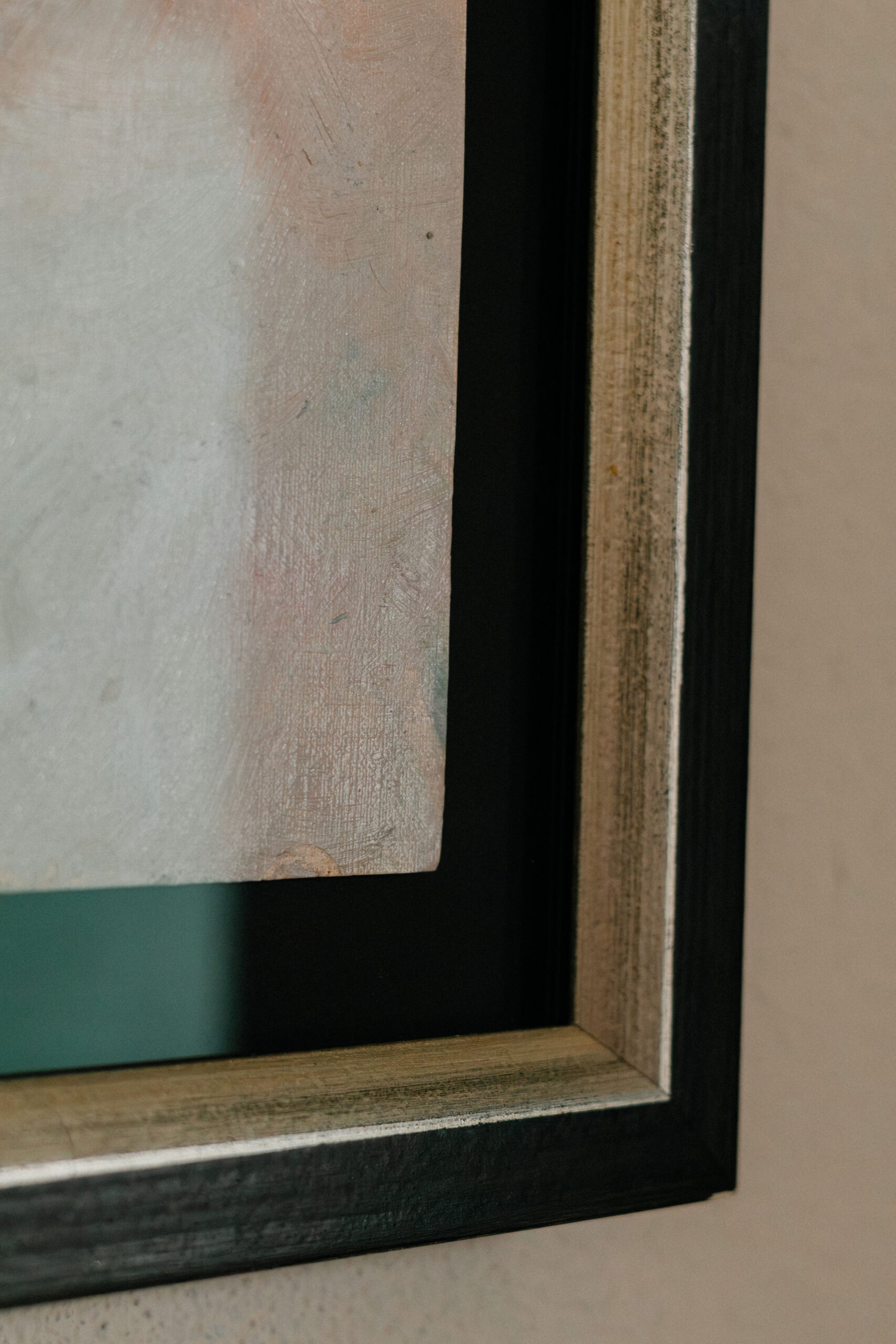
I brought along works ranging from fifteen centimetres to almost a metre, with bold charcoal lines, layered oil paint and expressive textures. Karolien suggested floating several pieces inside deep box frames, leaving the paper edges visible and space between the artwork and museum glass. This protects the work while preserving its movement and texture. Several works from It’s Nature and Icelandic Evening from the Icelandic Houses series were framed this way. Wood, glass and artwork become one composition, giving the larger pieces an almost sculptural presence.
Looking, Shifting and Looking Again
At the workshop, frame corner samples and small pieces of wood were spread across the table. We placed them beside the artwork and moved them around until the proportions felt right. Sometimes the distance between the paper and the frame needed to be greater. Sometimes a particular wood colour was too dominant, while the grain of another seemed to echo a line within the painting.
We looked beyond colour alone. Depth, rhythm, material and the play of shadows all played a part. A difference of just a few millimetres could determine whether a composition came into its own or lost some of its strength.
This shared way of looking is what I value in working with Karolien. Her craftsmanship doesn’t automatically lead to the most striking frame. The starting point is always what the artwork itself needs.
Framing as Part of the Artwork
A frame protects an artwork and allows it to be displayed safely on a wall. But to me, a good frame does more than that. It can introduce a sense of stillness around an image, make the presence of a material more tangible or strengthen the dynamics of a composition.
That is why I don’t see framing these works as a finishing touch that begins only when the painting is complete. It is the final spatial decision surrounding the artwork.
And sometimes, that final decision makes a surprising difference. The grain of the wood that seems to continue a charcoal line. A shadow that emphasises the irregular edge of the paper. Or a painting that, through the depth of its frame, almost becomes an object in its own right.
You can discover more about Karolien’s craftsmanship and the possibilities of bespoke framing at De Lijsterij.
Would you like to see one of these works and its framing up close? Visits to my studio in Voorhout are available by appointment.