
Symbolism in Painting: Material, Gesture and Meaning
Symbolism in my work does not only appear in recognisable forms such as a figure, a house or an animal. It can also develop through the way I draw or paint.
A line can connect one form to another. A rough mark can add fierceness. A movement in charcoal or paint can make something feel more mysterious, stronger or more defiant.
Sometimes I know that I am looking for this. At other times, I notice it while I am working.

Looking at what the work needs
There are moments when I stop painting and simply look.
I take in the painting as a whole. I look at what the forms are doing together, what the colour is doing, where my eye goes first and where the emphasis lies. I look at the visible layers and whether I can feel a route through the work.
Sometimes I realise that something is still missing. The painting may not yet have the strength, mystery or fierceness that I need for what I want to say. That is when I start looking for what could change it.

Meaning in a mark
A mark is not automatically symbolic to me. It becomes significant when it starts doing something within the work. It may connect two forms or change the atmosphere. A forceful gesture can make a figure more defiant. A particular line can suddenly give direction to something that was still unresolved.
This can be deliberate, but it can also happen through the act of making itself. I know roughly where I want to go, but I also respond to what has appeared on the paper or canvas. What I make influences my next decision.

A conversation with the work
I sometimes describe this as talking to a painting. Not literally, of course. It is another way of looking. While I work, I keep asking myself what the image is doing. Which form comes forward first? What happens between the colours? Where is the tension? Does the work have the strength I am looking for?
There is no exact formula for this. I may know what I want from a work, but something unexpected can happen in the material. I can then choose to follow it, strengthen it or change direction. For me, making a painting is a combination of knowing where I would like to go and allowing myself to be surprised by what has already happened.
Haas and the force of charcoal
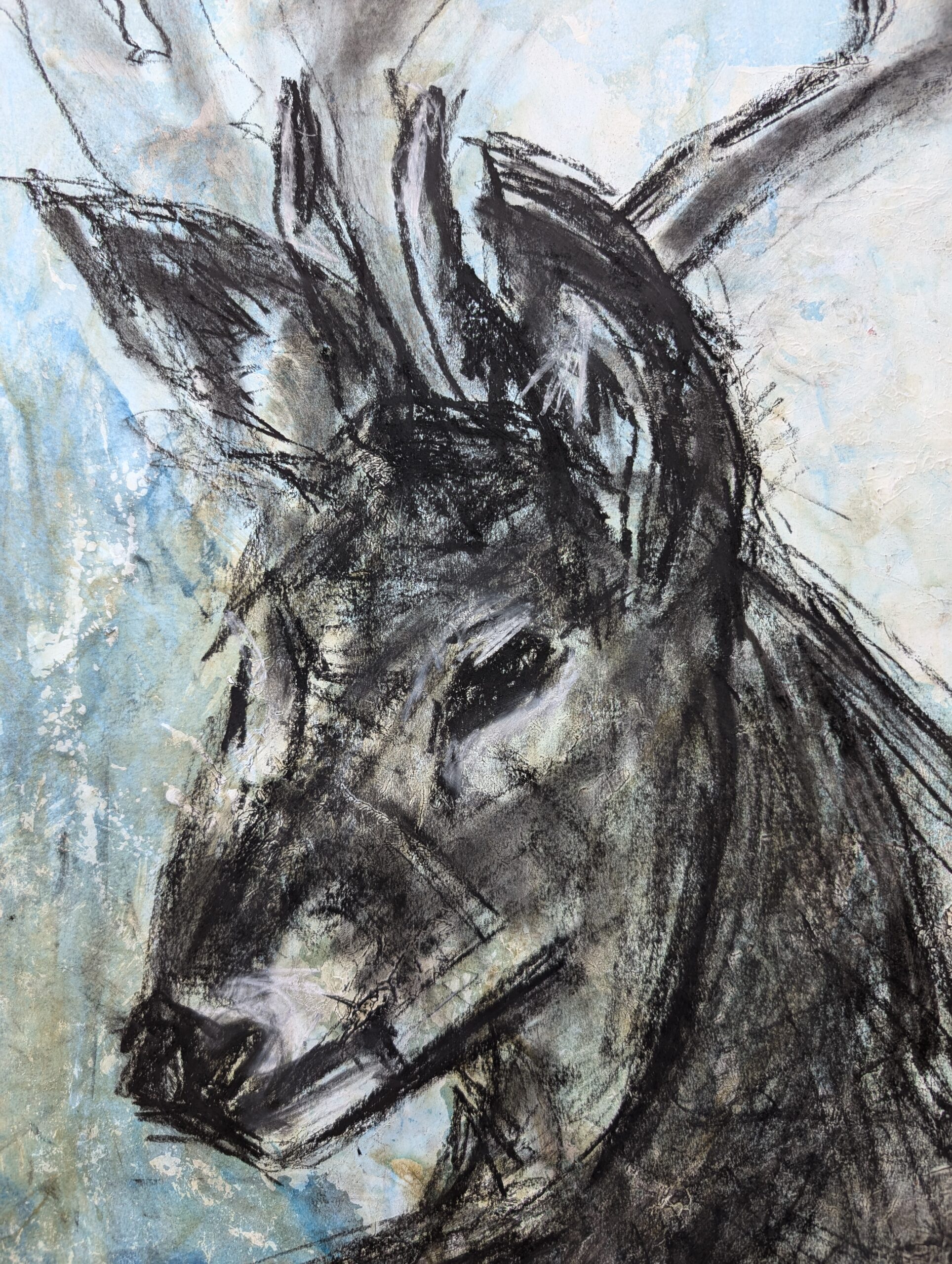
I saw this very clearly in one of my early charcoal drawings of Haas.
Haas was already an archetypal figure for me, but something happened while I was drawing him. The charcoal became increasingly fierce. In the hands and along the side of the body, the marks developed a force that I had not completely planned beforehand. I noticed it and thought: something is happening here.
There was a wildness in the drawing, but also something tough and defiant. I wanted more of that, so I pushed it further. In that moment I allowed what my hand and the charcoal were doing on the paper to influence the direction of the figure. The meaning was therefore not only contained in Haas as a recognisable figure. It was also present in the way he was made.



Symbolism before the symbol
This is an important part of how symbolism works in my paintings and drawings.
A recognisable form can eventually carry its own associations and narrative, but meaning can begin earlier. It can already be present in the pressure of charcoal, the direction of a mark, the relationship between two forms or the physical force with which something is put onto the surface. Sometimes I recognise that meaning immediately. Sometimes I only see it after I stop working and look again.
The recurring figures and motifs that develop from this process have their own stories. I explore those more closely in Symbols & Narrative.